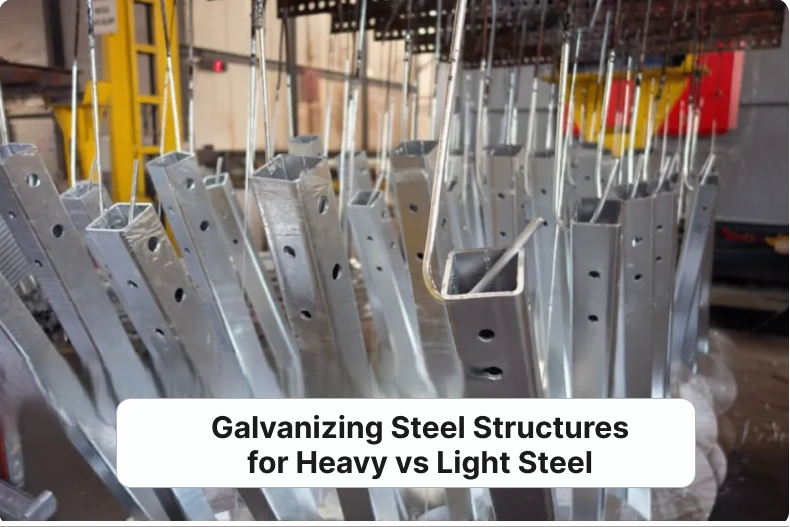
Galvanizing steel structures is a proven method for protecting both heavy and light steel components from corrosion, but the galvanizing behavior varies depending on section thickness, thermal mass, steel chemistry, and fabrication design. Heavy steel sections tend to retain heat longer during the hot dip galvanizing process, often resulting in thicker alloy coatings, while light steel sections typically produce thinner, smoother coatings and may require additional attention to distortion and drainage design.
By following recognized standards such as ASTM A123, ASTM A153, and ISO 1461, engineers and fabricators can ensure consistent coating thickness and long-term durability across different structural applications. Proper design considerations, including venting, drainage, and steel chemistry control, are essential to achieve optimal results.
With expertise in corrosion protection and modern galvanizing practices, Galcons India supports infrastructure, industrial, and fabrication projects by delivering reliable galvanizing solutions that meet international standards and help ensure long-lasting steel performance.
Introduction: Why Structure Weight Matters in Galvanizing
Hot dip galvanizing is widely used to protect steel from corrosion in infrastructure, industrial, and commercial applications. However, galvanizing steel structures behaves differently for heavy and light sections due to thermal mass, steel chemistry, and fabrication geometry.
Understanding these differences helps engineers, fabricators, and asset owners set realistic expectations for coating thickness, appearance, and performance, especially in large projects like transmission towers, solar structures, bridges, and industrial platforms.
How Hot Dip Galvanizing Works (Industry Perspective)
Hot dip galvanizing involves immersing fabricated steel in molten zinc at approximately 450°C (842°F). The zinc reacts metallurgically with the steel to form zinc-iron alloy layers topped with pure zinc, providing both barrier and cathodic protection.
Key factors influencing the coating include:
- Steel thickness and mass
- Surface preparation quality
- Steel chemistry (silicon and phosphorus content)
- Immersion time and bath temperature
- Geometry and drainage design
Heavy vs Light Steel Structures: Key Differences in Galvanizing Behavior
1. Thermal Mass and Coating Thickness
| Parameter | Heavy Steel Sections | Light Steel Sections |
|---|---|---|
| Heat Retention | High | Low |
| Zinc Reaction Time | Longer | Shorter |
| Typical Coating Thickness | Thicker coatings possible | Generally thinner coatings |
| Risk of Excessive Coating | Higher | Lower |
Industry Insight: Heavy sections stay in the zinc bath longer due to heat retention, often producing thicker zinc-iron alloy layers.
2. Steel Chemistry Sensitivity
- Heavy structural steel often has higher silicon content, which can trigger the Sandelin or Sebisty effect, leading to unusually thick or matte-gray coatings.
- Light steel (like thin sheets and tubes) typically has more controlled chemistry, resulting in smoother and brighter coatings.
3. Distortion and Dimensional Stability
- Heavy structures: Less prone to distortion but require proper venting and lifting design.
- Light structures: More susceptible to warping due to thermal stresses, especially thin sheet assemblies or welded frames.
4. Drainage and Venting Challenges
- Heavy fabricated assemblies require large vent and drain holes to avoid trapped zinc and internal explosions.
- Light steel parts may trap zinc in overlaps or seams if not designed for galvanizing.
Technical Standards for Galvanizing Steel Structures
Engineers often specify galvanizing requirements based on international standards:
ASTM Standards
- ASTM A123/A123M – Hot dip galvanizing for structural steel
- ASTM A153/A153M – Galvanizing of fasteners and hardware
- ASTM A780 – Repair of damaged galvanized coatings
ISO Standards
- ISO 1461 – Hot dip galvanized coatings on fabricated iron and steel
- ISO 14713 series – Guidelines for corrosion protection using zinc coatings
These standards define minimum coating thickness requirements based on steel thickness, ensuring predictable corrosion performance.
Benefits of Hot Dip Galvanizing for Heavy and Light Structures
Key Advantages
- Long-term corrosion protection (decades in many environments)
- Uniform coverage, including internal surfaces and edges
- Low maintenance lifecycle cost compared to paint systems
- Cathodic protection, even if the coating is scratched
- Suitable for harsh environments (industrial, marine, rural, solar, infrastructure)
Limitations and Considerations
While galvanizing is widely used, it is not universal:
- Appearance variability (matte, shiny, spangled finishes)
- Coating thickness variation depending on steel chemistry
- Size constraints due to kettle dimensions
- Potential distortion in thin sections
Post-galvanizing welding or cutting requires repair coatings
Common Mistakes and Misconceptions
1. Heavier Steel Always Means Better Protection-Thicker coatings can improve corrosion resistance, but steel chemistry and exposure environment matter more than mass alone.
2. Galvanizing Thickness Is Always Uniform-In reality, thickness varies across heavy and light sections due to metallurgical reactions and geometry.
3. Thin Steel Cannot Be Galvanized-Light-gauge steel can be galvanized successfully with proper design, welding practice, and venting.
4. Appearance Indicates Quality-A dull gray coating can still meet or exceed standard thickness requirements. Performance is measured by microns, not shine.
5. No Design Changes Are Needed Before Galvanizing-Ignoring vent holes, drainage, and weld sealing can lead to defects, trapped zinc, and safety risks.
Choosing Galvanizing for Different Structural Applications
Heavy Steel Structures
- Bridges
- Transmission towers
- Industrial platforms
- Structural beams and columns
Light Steel Structures
- Solar mounting frames
- Handrails and fencing
- Sheet metal assemblies
- Tubular structures
Both benefit from galvanizing, but design optimization and specification clarity are critical.
Conclusion: Aligning Design, Standards, and Expectations
Galvanizing steel structures, whether heavy or light, requires a clear understanding of how section thickness, steel chemistry, and fabrication geometry influence coating behavior. When engineers align design practices with recognized standards such as ASTM and ISO, hot dip galvanizing can deliver consistent coating performance and long-term corrosion protection across a wide range of structural applications.
By combining technical expertise with adherence to international standards, companies like Galcons India help ensure that galvanized steel components meet the durability, reliability, and quality expectations required for modern infrastructure, industrial, and fabrication projects.