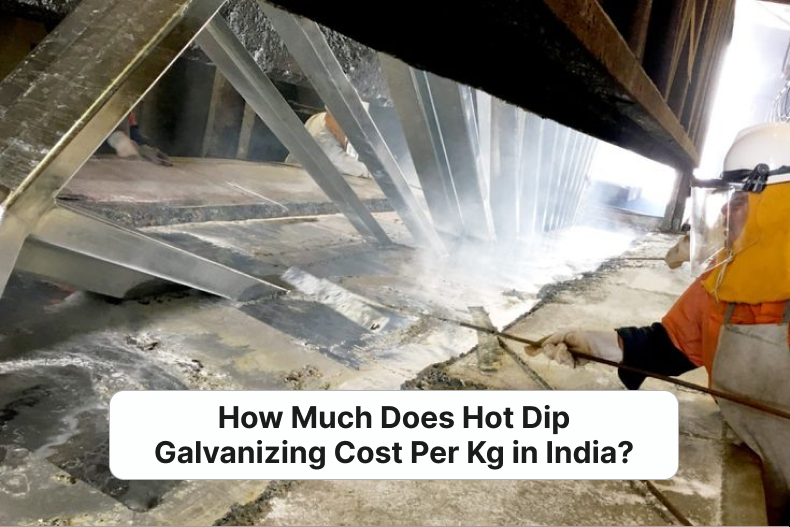
There is no single fixed per-kg rate for hot dip galvanizing in India — pricing depends on the steel’s surface area relative to weight, its silicon content, the coating thickness required for the application, and current zinc prices. As a rule of thumb, simple structural sections cost less per kg to galvanize than fabricated assemblies with hollow sections, welds, and complex geometry. Galcons India provides itemised quotes that reflect these factors rather than a single blanket per-kg rate.
What Actually Drives the Number
This is a companion to Galcons India’s full guide, What Determines the Cost of Hot Dip Galvanizing — the short version: surface area (not weight) drives zinc consumption, silicon-reactive steel consumes more zinc for the same nominal thickness, thicker coating specifications cost more, and zinc itself is priced on the London Metal Exchange in USD, so INR cost moves with both global zinc prices and the INR/USD exchange rate.
Typical Cost Bands by Component Type
| Component Type | Relative Cost Per Kg | Why |
|---|---|---|
| Simple structural sections (angles, channels) | Lower | Low surface-area-to-weight ratio, minimal fabrication complexity |
| Plate and sheet fabrications | Moderate | More surface area per kg than solid sections |
| Hollow/fabricated assemblies (welds, vents) | Higher | High surface area, more processing/handling time |
| Small fasteners (centrifuged) | Highest per kg | Batch handling overhead, thread tolerance requirements |
Contact Galcons India’s sales team with your component drawings for an itemised quote reflecting your project’s actual geometry rather than a generic per-kg estimate.