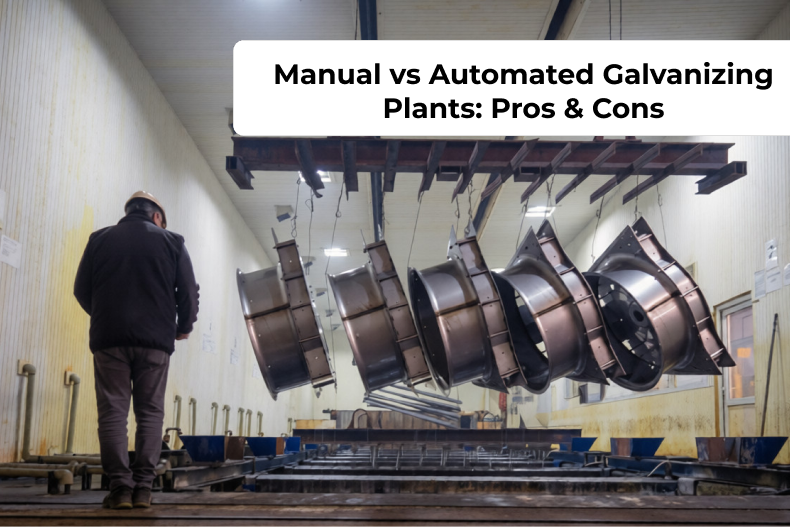
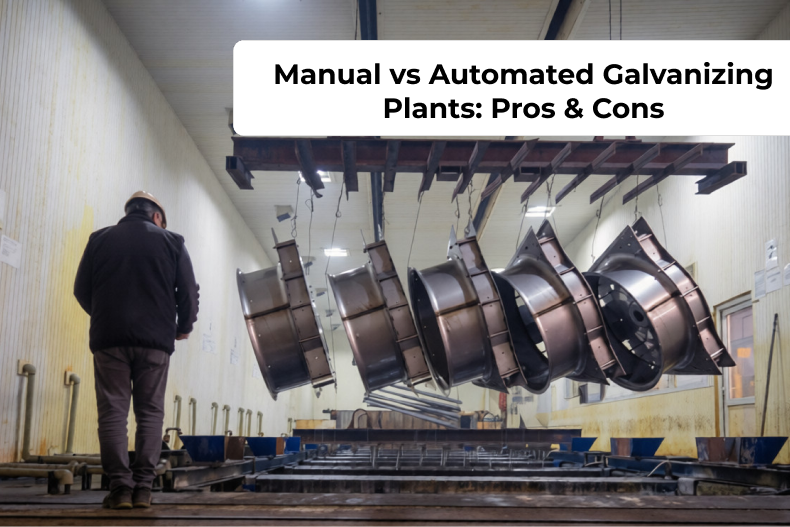
Manual and automated galvanizing plants both play important roles in the hot dip galvanizing industry. Manual plants rely on skilled operators for immersion control, inspection, and handling, making them suitable for customized or lower-volume projects. In contrast, an automated galvanizing plant uses PLC systems, automated cranes, and digital monitoring to improve coating consistency, throughput, safety, and quality traceability.
For large infrastructure, transmission, and export-driven fabrication projects, automation helps maintain consistent coatings and easier compliance with ASTM and ISO galvanizing standards through recorded process data. However, successful galvanizing still depends on proper steel chemistry, bath control, and operational expertise.
Companies like Galcons India combine industry experience with modern galvanizing practices to deliver reliable corrosion protection solutions, helping fabricators achieve long-lasting steel performance while maintaining strict quality control standards.
Introduction: Why Plant Automation Matters in Hot Dip Galvanizing
Hot dip galvanizing is a proven corrosion protection method for steel used in infrastructure, power transmission, solar structures, and industrial projects. However, the way a galvanizing plant is operated, manual or automated, can significantly influence coating consistency, productivity, safety, and long-term operational efficiency.
As demand grows for higher throughput and tighter quality control, many fabricators and EPC companies are evaluating whether to work with a manual galvanizing plant or an automated galvanizing plant. Understanding the advantages and limitations of both approaches helps project stakeholders make informed decisions.
Manual vs Automated Galvanizing Plants: Industry Perspective
What Is a Manual Galvanizing Plant?
A manual galvanizing plant relies heavily on operator-driven processes for material handling, bath immersion, withdrawal speed control, and inspection. Human expertise plays a central role in controlling coating thickness, bath chemistry adjustments, and quality checks.
Typical features:
- Manual cranes or semi-automatic hoists
- Operator-controlled immersion timing
- Manual fluxing and inspection processes
- Higher dependence on skilled labor
What Is an Automated Galvanizing Plant?
An automated galvanizing plant integrates programmable logic controllers (PLC), automated cranes, robotic handling, real-time bath monitoring, and digital quality tracking. Automation reduces variability by standardizing critical process parameters.
Typical features:
- Automated material handling and hoist control
- Controlled immersion and withdrawal speeds
- Digital bath chemistry monitoring
Inline coating thickness measurement and data logging
Comparison: Manual vs Automated Galvanizing Plants
| Parameter | Manual Galvanizing Plant | Automated Galvanizing Plant |
|---|---|---|
| Coating Consistency | Depends on operator skill | Highly consistent due to controlled parameters |
| Throughput | Moderate | High, optimized cycle times |
| Quality Traceability | Limited documentation | Digital logs and traceability |
| Safety | Higher operator exposure | Improved safety with reduced manual handling |
| Capital Investment | Lower initial investment | Higher upfront automation cost |
| Flexibility | More adaptable for custom jobs | Optimized for standardized production |
| Human Dependency | High | Reduced |
Evaluation Insight:
Manual plants can be suitable for low-volume or customized fabrication jobs, while automated plants are often preferred for large-scale infrastructure, utility, and export-driven projects where repeatability and documentation are critical.
Technical Standards Governing Galvanizing Operations
Both manual and automated plants must comply with internationally recognized standards to ensure coating performance:
ASTM Standards
- ASTM A123/A123M – Specification for hot dip galvanized coatings on structural steel
- ASTM A153/A153M – Galvanizing of hardware and fasteners
- ASTM A385 – Guidance on steel chemistry to avoid coating defects
ISO Standards
- ISO 1461 – Hot dip galvanized coatings on fabricated iron and steel articles
- ISO 14713 – Corrosion protection by zinc coatings
- ISO 9001 – Quality management systems (often integrated with automated QA systems)
Note: Automation can make compliance easier by recording process data and coating measurements for audits and client documentation.
Benefits of Hot Dip Galvanizing (Regardless of Plant Type)
- Long-term corrosion protection through sacrificial zinc coating
- Low lifecycle maintenance cost compared to paint systems
- Full coverage, including internal and hard-to-reach surfaces
- Mechanical durability suitable for harsh environments
- Sustainability, as zinc and steel are recyclable
Limitations of Hot Dip Galvanizing
- Design constraints (venting, drainage holes required)
- Potential distortion of thin or asymmetrical steel during immersion
- Aesthetic variability, especially with silicon-rich steels
- Size limitations based on kettle dimensions
- Higher upfront processing cost compared to basic paint (but lower lifecycle cost)
Common Mistakes and Misconceptions
- Manual Plants Always Mean Lower Quality-Quality depends on process control and operator expertise, not just automation level. Skilled operators can achieve excellent results in manual plants, though variability risk is higher.
- Automation Guarantees Perfect Coating-Even an automated galvanizing plant requires proper steel chemistry control, bath management, and maintenance. Automation reduces variability but does not eliminate metallurgical challenges.
- Coating Thickness Can Be Forced Digitally-Coating thickness is influenced by steel chemistry, immersion time, and bath composition. Automation controls parameters, but metallurgical reactions still govern final coating structure.
- Bigger Plants Are Always Better-The right plant type depends on project volume, part geometry, logistics, and compliance requirements. Smaller plants can be efficient for niche fabrication segments.
How to Evaluate a Galvanizing Plant for Your Project
When selecting a galvanizing partner, consider:
- Coating consistency and documented quality control
- Compliance with ASTM and ISO standards
- Traceability and inspection reports
- capability for your component sizes
- Safety and environmental controls
- Experience with your industry (solar, transmission, infrastructure, OEM)
Automation can be a strong indicator of process maturity, but process discipline and metallurgical expertise matter just as much.
Conclusion
The choice between a manual galvanizing plant and an automated galvanizing plant is not strictly one or the other. Both systems serve important roles in the industry depending on project scale, production volume, quality requirements, and operational strategy. For large infrastructure and export-oriented projects, automation provides greater repeatability, improved traceability, and higher production efficiency. Meanwhile, manual systems can still be practical and cost-effective for customized fabrication or lower-volume jobs where flexibility is important.
By understanding these differences, engineers, fabricators, and procurement teams can make more informed decisions when planning corrosion protection strategies for steel components. Companies such as Galcons India combine industry expertise with modern galvanizing practices to deliver reliable, standards-compliant corrosion protection solutions that meet the evolving demands of infrastructure and industrial projects.