Skip to content
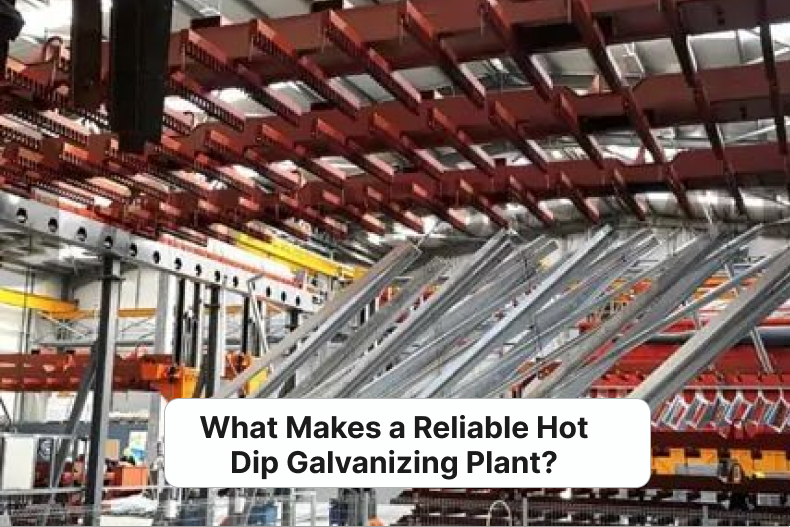
Choosing a reliable galvanizing plant is essential for ensuring long-term corrosion protection, consistent coating quality, and dependable project timelines. Engineers and project managers should evaluate key factors such as galvanizing quality control, plant capacity, compliance with ISO 1461 and ASTM A123 standards, and turnaround time before selecting a service provider. Partnering with an experienced industrial galvanizing provider like Galcons India helps infrastructure, solar, and industrial projects achieve durable corrosion protection, strong quality assurance, and reliable galvanizing performance.
Introduction: Choosing the Right Galvanizing Plant Is a Strategic Decision
Buyer Pain Points & Risks When Selecting a Galvanizing Plant
High-intent buyers often face these challenges:
1. Inconsistent Coating Quality
- Thin coatings leading to premature corrosion
- Excessive coating thickness causing fit-up issues
- Uneven coating and bare spots
2. Project Delays
- Long turnaround times due to limited bath size or capacity
- Scheduling bottlenecks during peak infrastructure or solar seasons
3. Compliance Uncertainty
- Plants not fully aligned with ASTM A123, ISO 1461, IS 4759, or EN standards
- Lack of traceability and test documentation
4. Hidden Lifecycle Costs
- Rework due to coating defects
- Increased maintenance and repainting expenses
- Premature asset replacement
A reliable galvanizing plant directly mitigates these risks.
Key Selection Criteria for a Reliable Galvanizing Plant
1. Proven Quality Control Systems
A dependable galvanizing plant follows structured galvanizing quality control processes:
- Incoming material inspection
- Surface preparation monitoring (degreasing, pickling, fluxing)
- Bath chemistry and temperature control
- Coating thickness testing (magnetic gauges, lab reports)
- Visual inspection and defect repair protocols
Look for:
- Documented QC procedures
- Traceable inspection records
- Certified inspection personnel
2. Capacity & Infrastructure Capabilities
Capacity determines whether the plant can handle your project scale and geometry.
Key factors to evaluate:
- Kettle size: Determines maximum length and weight of components
- Annual tonnage capacity: Indicates ability to handle large projects
- Handling systems: Cranes, automation, and jigging expertise
- Pre-treatment line capacity: Impacts coating consistency and speed
Large infrastructure or solar EPC projects require plants with scalable throughput.
3. Turnaround Time & Operational Reliability
Delays in galvanizing can halt entire construction schedules.
Ask about:
- Typical lead times (standard vs. rush jobs)
- Batch scheduling process
- Peak season capacity planning
- Contingency handling (equipment downtime, zinc supply)
A reliable galvanizing plant should offer predictable turnaround, not just fast processing.
4. Compliance With International & Local Standards
Compliance is non-negotiable for infrastructure, export, and utility projects.
Common standards include:
- ASTM A123 / A153 (USA & global projects)
- ISO 1461 (international)
- IS 4759 (India)
- EN 1461 (Europe)
Check for:
- ISO 9001, ISO 14001, ISO 45001 certifications
- In-house lab testing and third-party inspection support
- Mill certificates and test reports
5. Technical Expertise & Engineering Support
The best galvanizing plants don’t just dip steel, they provide engineering guidance:
- Pre-galvanizing design recommendations
- Drainage and venting advice
- Distortion prevention strategies
- Coating thickness optimization for service environment
This consultative capability often differentiates commodity galvanizers from premium service providers.
Real-World Use Cases: Why the Right Galvanizing Plant Matters
Case 1: Solar Mounting Structures (Utility-Scale Project)
Challenge: 25-year durability requirement in coastal environment
Solution: Plant provided controlled coating thickness >85 µm per ASTM A123, batch traceability, and fast throughput for EPC schedule.
Result: Reduced lifecycle maintenance costs and ensured bankable project compliance.
Case 2: Transmission Towers for Power Utility
Challenge: High tonnage, strict delivery timelines, and third-party inspection
Solution: High-capacity galvanizing plant with large kettle and integrated QC lab.
Result: Zero coating rejections, on-time dispatch, and full compliance documentation.
Case 3: Industrial Fabrication Export Project
Challenge: European compliance and uniform finish requirement
Solution: Plant aligned with ISO 1461 and EN standards with surface finish control.
Result: Export approval without rework or penalties.
Decision-Making Checklist for Selecting a Galvanizing Plant
Use this checklist before finalizing your supplier:
Quality & Compliance
- ASTM / ISO / IS standard compliance confirmed
- Documented QC procedures and inspection reports
- Certified quality management system
Capacity & Infrastructure
- Kettle size suitable for your largest components
- Sufficient tonnage capacity for your project scale
- Robust handling and logistics infrastructure
Operational Reliability
- Predictable turnaround times
- Production scheduling transparency
- Backup systems for zinc supply and equipment
Technical Support
- Pre-galvanizing design guidance available
- Engineering consultation for complex fabrications
- Post-galvanizing testing and documentation
Commercial & Strategic Factors
- Transparent pricing model
- Long-term partnership capability
- Track record in similar industries (solar, infrastructure, industrial)
Why Professional Hot Dip Galvanizing Matters for Long-Term Performance
Hot dip galvanizing is not just a coating, it’s a metallurgically bonded corrosion protection system that can deliver 20–50+ years of service life depending on environment.
A professional galvanizing plant ensures:
- Uniform metallurgical coating layers
- Controlled thickness for optimal corrosion resistance
- Minimal defects and rework
- Compliance with global engineering standards
- Predictable lifecycle performance and lower total cost of ownership
Choosing a substandard plant can compromise the entire asset lifecycle.
Final Thoughts: Make an Informed, Risk-Free Decision
A reliable galvanizing plant is a critical partner in ensuring infrastructure durability, industrial reliability, and long-term project profitability. Evaluating factors such as quality systems, plant capacity, turnaround reliability, and compliance with industry standards helps ensure your structures perform as designed without unexpected failures or costly maintenance. Partnering with experienced providers like Galcons India can further strengthen project outcomes by delivering consistent coating quality, dependable service, and long-lasting corrosion protection for steel structures.