Understanding the true hot dip galvanizing cost requires looking beyond price per ton and considering factors like steel geometry, surface preparation, coating thickness standards, zinc market volatility, and logistics. For engineers and procurement teams, evaluating these variables helps optimize both upfront costs and long-term corrosion protection performance.
Galcons India delivers high-quality industrial galvanizing backed by strict adherence to ASTM A123 and ISO 1461 standards, efficient batch processing, and controlled zinc consumption. With advanced surface preparation, reliable turnaround times, and a focus on lifecycle cost efficiency, Galcons India helps projects achieve durable corrosion protection with predictable performance and optimized total cost of ownership.
Introduction: Why Understanding Hot Dip Galvanizing Cost Matters
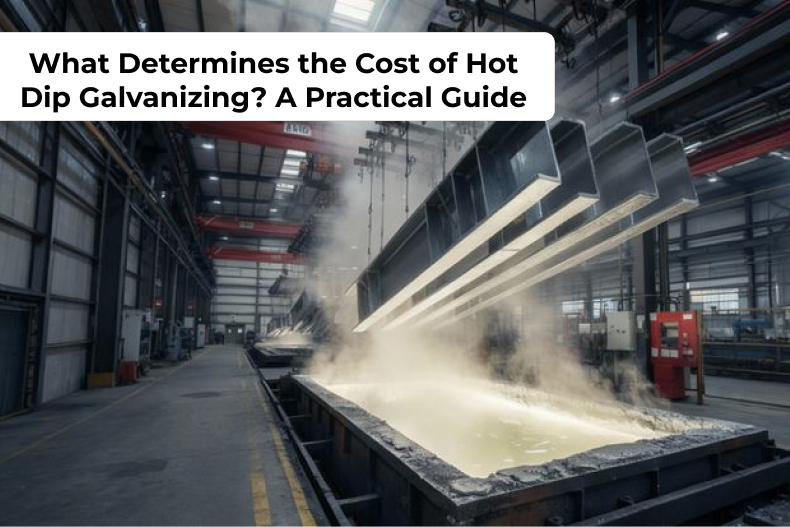
Hot dip galvanizing (HDG) is widely used to protect steel structures from corrosion in industries such as construction, infrastructure, manufacturing, and energy. While many buyers focus on the price per ton or per square meter, the true cost depends on several technical and operational factors.
Understanding these cost drivers helps engineers and procurement teams make informed decisions, compare coating solutions, and optimize lifecycle performance—rather than evaluating galvanizing as a simple commodity service.
Industry Perspective: Key Factors That Influence Hot Dip Galvanizing Cost
1. Steel Surface Area and Geometry
Galvanizing cost is primarily influenced by the total surface area of steel, not just weight. Complex shapes, hollow sections, and fabricated assemblies increase surface area and zinc consumption.- Complex designs require more zinc coating
- Internal cavities may require venting and drainage
- Welds, sharp edges, and corners impact coating thickness
2. Steel Chemistry and Surface Condition
- The chemical composition of steel affects how zinc reacts during galvanizing.
- Silicon and phosphorus content can increase coating thickness
- Mill scale, rust, oil, and contaminants require additional surface preparation
- Surface preparation (pickling and fluxing) is a major operational cost component.
3. Coating Thickness Requirements
Different applications require different coating thickness levels based on corrosion exposure. Typical standards include:- ASTM A123 / A123M – Standard specification for zinc coatings on iron and steel products
- ISO 1461 – Hot dip galvanized coatings on fabricated iron and steel articles
- Thicker coatings require more zinc and longer immersion times, increasing cost.
4. Zinc Market Prices
- Zinc is a commodity traded globally, so its price fluctuates based on market conditions.
- Zinc price volatility directly affects galvanizing cost
- Some galvanizers use surcharge models to adjust for zinc price changes
5. Batch Size and Throughput Efficiency
- Economies of scale apply in galvanizing operations.
- Large batch processing reduces handling and setup costs per unit
- Small custom jobs may incur higher per-unit processing costs
6. Logistics and Handling Requirements
Transportation, loading, and unloading large fabricated parts add cost, especially for oversized or heavy assemblies.- Special handling equipment
- Packaging and storage requirements
- Distance from fabrication site to galvanizing plant
Comparison: Hot Dip Galvanizing vs Other Corrosion Protection Options
| Factor | Hot Dip Galvanizing | Industrial Painting |
|---|---|---|
| Coating thickness | Metallurgically bonded zinc layer | Organic coating film |
| Durability | 20–70+ years in many environments | Typically 5–15 years |
| Maintenance | Minimal | Requires periodic repainting |
| Initial cost | Often higher | Usually lower |
| Lifecycle cost | Often lower | Often higher |
Hot Dip Galvanizing vs Metallizing (Thermal Spray Zinc)
Hot Dip Galvanizing vs. Metallizing (Thermal Spray Zinc)
| Parameter | Hot Dip Galvanizing | Metallizing (Thermal Spray Zinc) |
|---|---|---|
| Application Method | Steel is fully immersed in molten zinc | Molten zinc is sprayed onto the steel surface |
| Bonding Type | Metallurgical bonding (zinc-iron alloy layers) | Mechanical bonding to the surface |
| Coating Uniformity | Uniform coverage including edges and internal sections | Depends on operator skill and spray consistency |
| Coating Thickness Control | Controlled by steel chemistry and immersion time | Can be adjusted during spraying |
| On-Site Application | Performed in galvanizing plant | Ideal for field/on-site application |
| Suitable for Very Large Structures | Limited by kettle size | Highly suitable |
| Surface Preparation | Standard chemical cleaning process | Requires intensive surface blasting |
| Durability | Very high due to alloy layer formation | Good, but depends on application quality |
| Lifecycle Cost | Typically lower long-term cost | Can be higher depending on project size |
Benefits of Hot Dip Galvanizing
- Long-Term Corrosion Protection HDG provides sacrificial protection, meaning zinc corrodes before steel.
- Uniform Coverage Molten zinc coats internal and external surfaces, including corners and welds.
- Low Maintenance Requirements Compared to painting systems, galvanizing requires minimal inspection and recoating.
- Predictable Performance Standards like ASTM A123 and ISO 1461 provide measurable coating thickness requirements.
Limitations and Considerations
- Size Constraints Tank dimensions limit the size of components that can be galvanized in a single dip.
- Appearance Variability Coating finish may vary due to steel chemistry and surface conditions.
- Fabrication Design Requirements Vent and drain holes are required for hollow sections to ensure proper coating and safety.
- Zinc Thickness Variability Silicon-rich steels may produce thicker coatings, increasing zinc usage and cost.
Common Misconceptions About Hot Dip Galvanizing Cost
- Cost Is Based Only on Weight In reality, surface area, geometry, and coating thickness drive zinc consumption.
- Galvanizing Is Always More Expensive Than Painting While initial cost may be higher, lifecycle costs are often lower due to reduced maintenance.
- All Galvanizing Coatings Are the Same Coating thickness and quality vary based on standards, steel chemistry, and process control.
- Zinc Price Is the Only Cost Driver Operational, logistical, and technical factors play a significant role.
How to Evaluate Hot Dip Galvanizing Cost for Your Project
To accurately assess the total cost and long-term value, engineers and procurement teams should consider the following key factors:
- Total Steel Surface Area: The primary driver of zinc consumption and processing time. Complex geometries and fabricated assemblies increase this area.
- Required Coating Thickness: Must comply with standards like ASTM A123 or ISO 1461, as the specified thickness directly determines the amount of zinc consumed.
- Steel Chemistry and Fabrication Quality: The steel’s silicon and phosphorus content affects the zinc-iron alloy growth, and poor fabrication (e.g., excessive rust, mill scale) increases pre-treatment costs.
- Batch Size and Logistics: Larger, standardized batches benefit from economies of scale, while complex handling or long transportation distances add to the overall cost.
- Expected Service Environment: The environment (e.g., highly corrosive marine vs. mild rural) dictates the required coating thickness, impacting initial cost and expected service life.
- Partner Experience: Selecting a qualified galvanizer is essential. Partner experience (e.g., Galcons India offers consultation on design optimization to minimize overall cost) can help reduce rework, ensure compliance, and maximize lifecycle value.
This approach shifts focus from upfront price to total lifecycle performance and durability.
Conclusion: Making Informed Decisions About Hot Dip Galvanizing
Hot dip galvanizing cost is shaped by multiple technical, operational, and market-driven factors—ranging from steel design and surface preparation to coating thickness standards and zinc price volatility. By understanding these drivers, engineers and procurement teams can move beyond simple price comparisons and focus on long-term durability, performance, and lifecycle value.
Galcons India stands out as a reliable industrial galvanizing partner, delivering consistent coating quality in line with ASTM A123 and ISO 1461 standards, optimized zinc usage, and efficient turnaround times. With advanced process control, experienced technical teams, and a strong focus on lifecycle cost efficiency, Galcons India helps project stakeholders make informed, cost-effective decisions while ensuring long-term corrosion protection for critical steel structures.