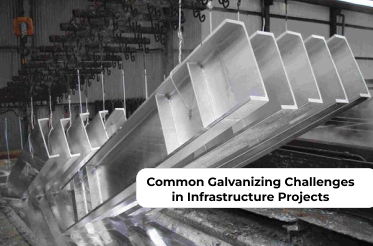
Hot dip galvanizing is widely used in infrastructure projects, but galvanizing challenges in infrastructure projects can impact coating performance, compliance, and long-term durability. Hot dip galvanizing plays a critical role in infrastructure projects, protecting steel from corrosion and significantly extending service life in harsh and coastal environments. Bridges, transmission towers, railings, lighting poles, and heavy industrial structures depend on durable zinc coatings to reduce long-term maintenance costs and enhance structural reliability. Despite its proven performance, many engineers, contractors, and project managers face galvanizing challenges that can impact coating quality, timelines, and compliance with project specifications. Variations in steel chemistry, surface preparation issues, design limitations, and improper handling can all affect final coating performance if not addressed proactively. At Galcons India, we work closely with infrastructure consultants, EPC contractors, and fabricators to identify and mitigate galvanizing challenges at the design and planning stage itself. By aligning with relevant ASTM and ISO standards, maintaining strict process control, and offering technical guidance on steel selection and fabrication best practices, Galcons India helps ensure consistent coating thickness, strong metallurgical bonding, and long-term corrosion protection. This article explores common galvanizing challenges from an industry perspective, references applicable standards, and clarifies the practical benefits and limitations of hot dip galvanizing in large-scale infrastructure applications—while highlighting how the right galvanizing partner can make a measurable difference in project success.
Understanding Hot Dip Galvanizing in Infrastructure
Hot dip galvanizing (HDG) involves immersing fabricated steel in molten zinc, forming a metallurgically bonded zinc-iron alloy layer. This coating provides both barrier protection and sacrificial corrosion protection, making it suitable for long-term outdoor exposure.
Relevant Technical Standards
- ASTM A123/A123M – Standard specification for zinc coatings on iron and steel products
- ASTM A153/A153M – Zinc coating for hardware and fasteners
- ISO 1461 – Hot dip galvanized coatings on fabricated iron and steel articles
- ISO 14713 – Guidelines for corrosion protection of iron and steel structures
These standards define coating thickness requirements, inspection methods, and acceptance criteria.
Key Galvanizing Challenges in Infrastructure Projects
1. Variability in Coating Thickness
Achieving consistent zinc coating thickness can be challenging due to several metallurgical and process-related factors: Primary Influencing Factors:- Steel chemistry (especially silicon and phosphorus content)
- Section thickness and geometry
- Immersion time in the zinc bath
- Bath temperature and composition
- Compliance with ASTM or ISO standard
- Structural fit and assembly tolerances
- Long-term performance in aggressive environments
2. Surface Preparation Issues
Surface preparation is the foundation of a successful galvanizing process. The stages, degreasing, pickling, and fluxing, must be properly executed to ensure metallurgical bonding between zinc and steel. Common Defects from Inadequate Preparation:- Bare spots
- Poor zinc adhesion
- Premature corrosion
- Residual mill scale
- Oil and grease contamination
- Welding slag and fabrication debris
- Improper pickling or insufficient cleaning time
3. Distortion and Warping
Thermal exposure during galvanizing (approximately 450°C) can introduce distortion, particularly in large, thin, or asymmetrically designed steel components. Contributing Factors:- Thermal stresses during immersion
- Uneven heating and cooling
- Residual stresses from welding or fabrication
- Asymmetrical structural design
- Structural beams
- Guardrails
- Transmission towers
- Precision-fabricated assemblies
4. Aesthetic Concerns
While galvanizing prioritizes corrosion protection, certain infrastructure projects, such as urban railings, architectural steel, and public installations, also require visual consistency. Common variations include:- Spangle pattern differences
- Color variations (gray to shiny silver)
- Matte versus bright finishes
5. Design Constraints
Improper design is one of the most preventable galvanizing challenges. Problematic Design Features:- Closed sections without adequate vent and drain holes
- Tight tolerances on mating parts
- Overlapping surfaces that trap zinc
- Complex assemblies that restrict drainage
- Incomplete coating
- Excess zinc accumulation
- Safety hazards during immersion
- Non-compliance with galvanizing standards
6. Compatibility with Other Coatings (Duplex Systems)
Combining galvanizing with paint systems, known as duplex coatings, can significantly extend service life. However, successful implementation requires strict technical control. Critical Requirements:- Proper surface sweep blasting
- Appropriate paint system selection
- Adhesion and compatibility testing
Hot Dip Galvanizing vs. Other Corrosion Protection Methods
1. Hot-Dip Galvanizing
Advantages:- Long service life (especially in industrial and coastal environments)
- Sacrificial (cathodic) protection , zinc corrodes before steel
- Full coverage including edges, corners, and internal surfaces
- Low maintenance and predictable lifecycle performance
- Potential thermal distortion in thin or asymmetrical sections
- Size limitations based on galvanizing bath dimensions
- Aesthetic variation in finish
2. Paint Coating Systems
Advantages:- Wide color flexibility and aesthetic customization
- Can be applied on-site
- Lower initial application cost
- No sacrificial protection
- Prone to chipping, cracking, and UV degradation
- Requires regular inspection and maintenance
- Higher lifecycle cost in aggressive environments
3. Metalizing (Thermal Spray Coating)
Advantages:- Thick, controllable coating layers
- Minimal thermal distortion
- Suitable for large on-site structures
- Higher application cost
- Requires skilled operators and specialized equipment
- Surface preparation is critical for adhesion
4. Stainless Steel
Advantages:- Excellent inherent corrosion resistance
- No coating required
- Strong aesthetic appeal
- Significantly higher material cost
- May not be economical for large infrastructure projects
- Susceptible to specific forms of corrosion in extreme environments
Strategic Conclusion
How Galcons India Helps Overcome Common Galvanizing Challenges
1. Managing Coating Thickness Variability
Galcons India closely monitors:- Steel chemistry reactivity
- Bath temperature and zinc composition
- Immersion time and withdrawal speed
2. Ensuring Superior Surface Preparation
Since coating performance begins with preparation, Galcons India maintains stringent control over:- Degreasing and pickling parameters
- Flux concentration and cleanliness
- Contaminant removal from fabricated components
3. Minimizing Distortion and Warping
For structural beams, guardrails, and complex assemblies, Galcons India provides:- Pre-galvanizing design consultation
- Guidance on symmetric fabrication and stress relief
- Recommendations on venting and drainage
4. Addressing Aesthetic Expectations
Where architectural uniformity is important, Galcons India works with stakeholders to:- Set realistic finish expectations
- Explain metallurgical influences on appearance
- Maintain consistent process controls for visual uniformity
5. Design Support for Safe and Complete Galvanizing
Improper design is a leading cause of galvanizing defects. Galcons India assists engineers and fabricators by advising on:- Proper vent and drain hole placement
- Tolerance allowances for coating thickness
- Assembly configurations to prevent zinc entrapment
6. Duplex System Compatibility
For projects requiring extended service life, Galcons India supports duplex coating systems by:- Preparing galvanized surfaces appropriately
- Advising on paint compatibility
- Aligning with ISO 12944 and ISO 14713 recommendations