Skip to content
Centrifugal Galvanizing
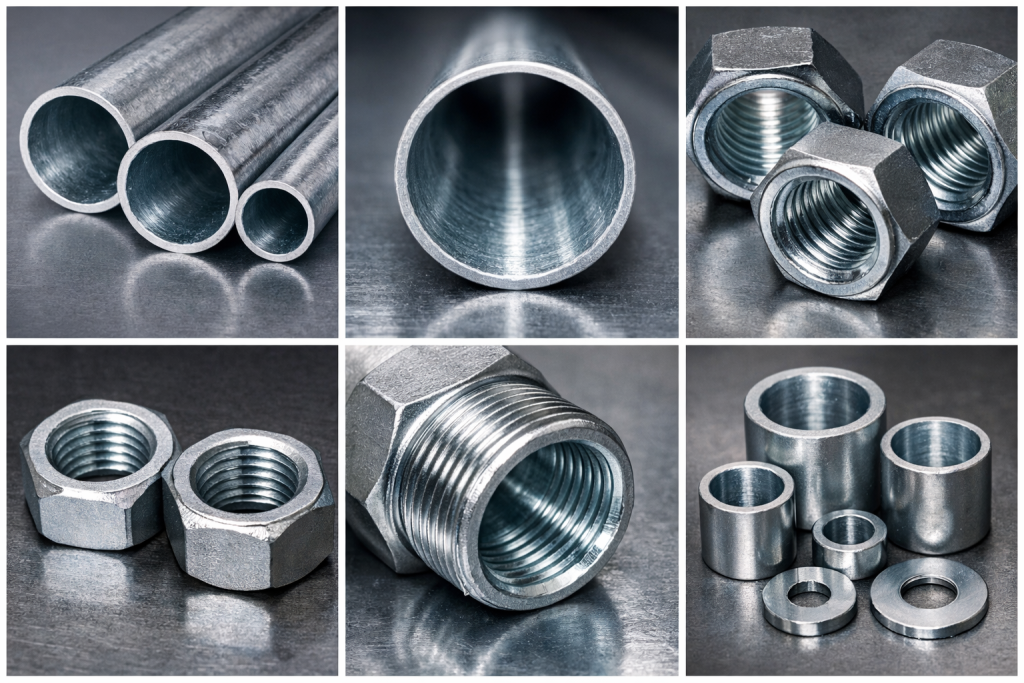
Centrifugal galvanizing is a specialized corrosion‑protection process where molten zinc is applied to the internal surfaces of steel components using centrifugal force. Unlike traditional galvanizing, this method ensures uniform zinc coating inside pipes, tubes, fasteners, threaded components, and cylindrical parts — even in areas difficult to reach. The process is ideal for high‑precision industrial components that demand consistent protection against corrosion and wear.
How Centrifugal Galvanizing Works
Preparation & Cleaning
All components undergo thorough cleaning to remove oil, rust, mill scale, and other impurities.
Fluxing
After cleaning, parts are dipped in flux to prevent oxidation and improve wettability with molten zinc
Centrifugal Coating
Centrifugal force pushes the zinc into every internal contour, forming a smooth, continuous protective layer.
Cooling & Inspection
It is then inspected for thickness, uniformity, and adhesion to ensure compliance with quality standards.
Key Features & Benefits
Superior Internal Corrosion Protection
- Coats interior surfaces uniformly.
- Eliminates unprotected areas common in conventional methods.
Enhanced Durability
- Creates a dense, metallurgically bonded zinc layer.
- Extends service life even in harsh environments.
Precision & Consistency
- Centrifugal action ensures controlled coating thickness.
- Ideal for critical industrial components and high‑performance applications.
Minimal Surface Imperfections
- Produces a smooth finish with reduced buildup or drip marks.
- Greatly improves aesthetics and functional performance.
Infrastructure & Capacity
75,000
Total Area (Sq.ft)
54,000
Built up area (Sq.ft)
3,500MT
Monthly Capacity
50 MT
Weight Bridge Capacity
1000 L/hour
ETP Capacity
250 KVa
Diesel Generator
Creanes & handling Equipment
No. of Overhead creanes 12, forklifts, Hadya