What Makes a Reliable Hot Dip Galvanizing Plant?
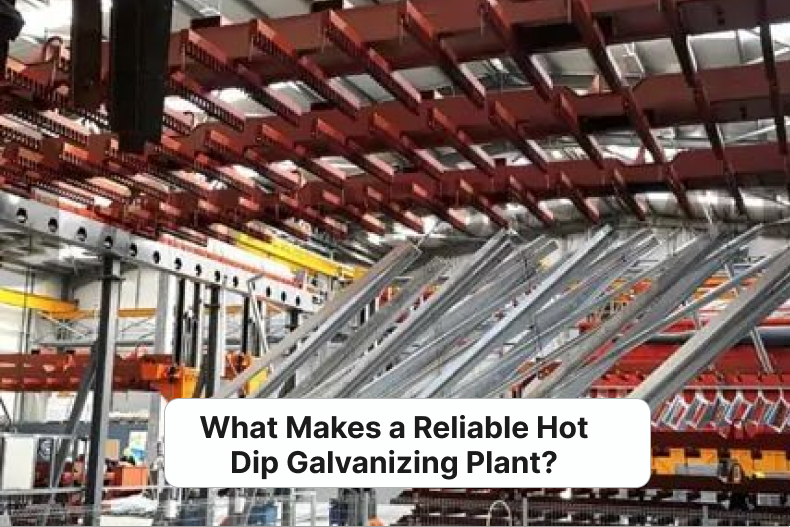
A reliable hot dip galvanizing plant combines adequate zinc bath capacity, rigorous surface preparation (degreasing, pickling, fluxing), controlled bath temperature and zinc composition, trained quality inspectors, IS 2629 / ISO 1461 compliance, and full batch documentation. Plants with certified quality management systems and environmental compliance consistently deliver coating quality that protects steel for 50+ years.
Introduction
Galvanizing looks simple — steel goes in, galvanized steel comes out. But the difference between a plant producing 70-year corrosion protection and one producing 10-year protection lies entirely in what happens inside.
For EPC contractors, fabricators, and project developers evaluating galvanizing vendors across Pune, Maharashtra, and India, understanding what makes a plant reliable is essential procurement knowledge.
Importance of Hot Dip Galvanizing in Modern Industries
Galvanizing plant capability directly determines corrosion protection performance. With India’s infrastructure committing to 25–50 year design lives, galvanizing quality is a critical long-term investment — not a commodity purchase.
Core Components of a Reliable Galvanizing Plant
1. Zinc Bath (Kettle) — Capacity and Condition
The zinc bath dimensions determine what steel the plant can process. A reliable plant maintains:
- Bath length of 6–12 metres for most structural applications
- Regular drossing to remove iron-zinc sludge from the bath bottom
- Continuous temperature monitoring maintained at 445–455°C
- Ash skimming before every production dip
Bath size must be confirmed against your largest steel sections before placing an order.
2. Surface Preparation Line
Surface preparation is often more important than the zinc bath itself. A proper line includes:
- Degreasing: Removes oil, grease, and cutting fluids. Must be regularly managed — contaminated solution causes bare spots.
- Acid Pickling: Hydrochloric acid removes mill scale and rust. Acid concentration, iron content, and immersion time must be carefully controlled.
- Fluxing: Zinc ammonium chloride flux prepares the steel surface for zinc immersion. Flux pH and concentration require regular testing — flux breakdown directly causes galvanizing defects.
- Drying: Steel must be completely dry before entering the zinc bath. Any residual moisture causes dangerous steam ejection in the molten zinc.
3. Zinc Metal Quality
SHG (Special High Grade) zinc — 99.99% purity — is the industry standard. Reliable plants:
- Purchase zinc from certified suppliers with mill test certificates
- Test bath composition regularly
- Manage iron accumulation through scheduled drossing operations
Lower-grade zinc produces inferior coatings with reduced corrosion performance.
4. Material Handling and Jigging
How steel is suspended in the bath affects coating uniformity. Quality plants use purpose-built jigging fixtures, plan steel orientation carefully, and have skilled operators who understand how geometry affects zinc drainage.
5. Post-Galvanizing Inspection
Every batch should be inspected for:
- Bare spots (assessed per IS 2629)
- Excessive zinc drips interfering with assembly
- Surface inclusions or rough areas
- Coating thickness compliance (EM gauge testing)
A documented inspection protocol with trained inspectors is a hallmark of plant reliability.
6. Environmental Compliance
Galvanizing generates hazardous waste — spent hydrochloric acid, iron chloride sludge, zinc dross. A compliant plant manages these within Maharashtra Pollution Control Board (MPCB) requirements. Environmental non-compliance is a significant risk for the entire supply chain.
7. Quality Management System
ISO 9001 certification or equivalent provides the framework for documented processes, in-process quality checks, corrective action systems, and batch traceability. A plant with a genuine QMS delivers consistent quality — not batch-to-batch variation.
Why Businesses Prefer Local Galvanizing Services
A local plant allows clients to visit, audit, and build direct familiarity with operational quality — something not possible with remote vendors. Galcons India welcomes plant visits and quality audits from prospective and existing clients.
Why Choose Galcons India
Galcons India operates a professional, fully equipped galvanizing plant in Pune serving infrastructure, solar, and industrial clients across Maharashtra and India.
- High-capacity zinc bath for large structural sections
- Full surface preparation line — degreasing, pickling, fluxing, drying
- SHG zinc with regular composition monitoring
- Centrifugal galvanizing for fasteners and hardware
- IS 2629 / ISO 1461 compliant QMS
- MPCB compliant operations
- Full batch documentation: galvanizing certificates, thickness test reports
Frequently Asked Questions (FAQs)
1: What is the most important component of a galvanizing plant?
Both the zinc bath management and surface preparation line are critical. Excellent bath management cannot overcome poor surface preparation.
2: Why does bath temperature matter in galvanizing?
445–455°C is the optimal operating range. Below this, coatings are rough and uneven. Above this, alloy layers grow too fast, producing brittle coatings.
3: What is zinc dross, and why must it be removed?
Iron-zinc dross settles at the bath bottom. If not removed regularly, it contaminates coatings as inclusions, reducing adhesion and surface quality.
4: How do I know if a galvanizing plant is environmentally compliant?
Ask for their MPCB consent-to-operate documentation and details of their acid effluent treatment system.
5: Does plant age affect galvanizing quality?
Less than management quality. A well-maintained older plant outperforms a poorly managed newer one. Focus on process capability and test results.
6: What causes bare spots in galvanized coatings?
Flux breakdown, surface contamination not removed in pickling, or sealed cavities without vent holes.
7: Can I audit Galcons India's plant before placing my first order?
Yes — and we encourage it for large or specification-critical orders.
8: What is the difference between a galvanizing plant and zinc electroplating?
Hot dip galvanizing uses molten zinc at approximately 450°C to produce thick (45–85+ µm), metallurgically bonded coatings. Electroplating deposits thinner (5–25 µm) zinc coatings electrochemically. For structural corrosion protection, hot dip galvanizing significantly outperforms electroplating.